
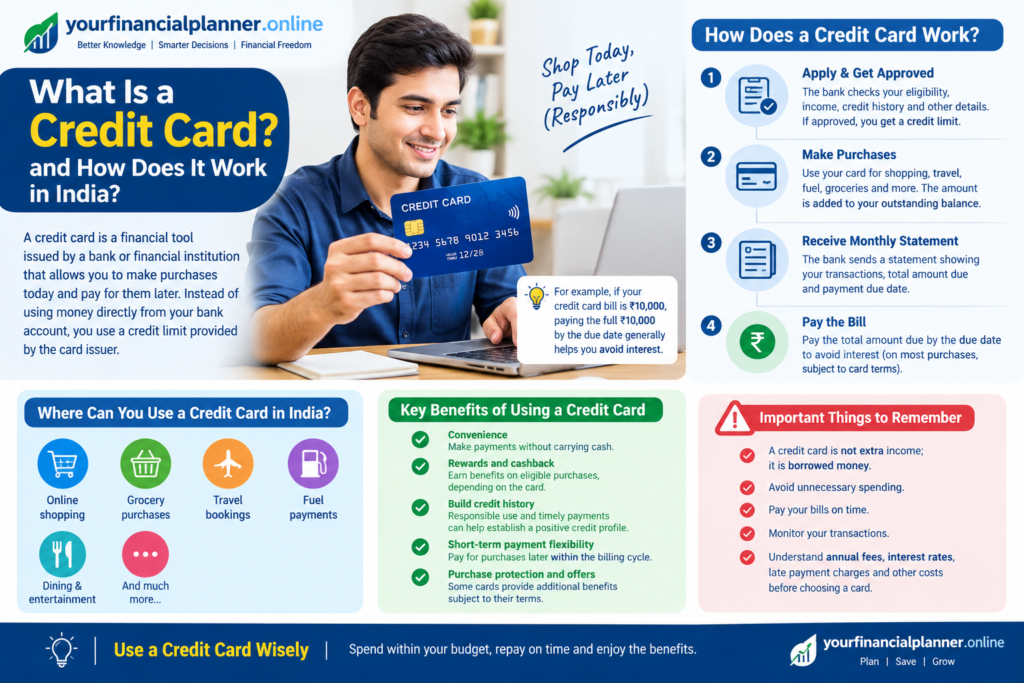
A credit card is a financial tool issued by a bank or financial institution that allows you to make purchases today and pay for them later. Instead of using money directly from your bank account, you use a credit limit provided by the card issuer.
In India, credit cards are commonly used for online shopping, grocery purchases, travel bookings, fuel payments and other everyday expenses. They can also offer benefits such as cashback, reward points, discounts and interest-free payment periods, depending on the card’s terms and conditions.
How Does a Credit Card Work?
When you apply for a credit card, the bank evaluates your eligibility, income, credit history and other relevant factors. If your application is approved, the bank assigns you a credit limit.
Whenever you use the card to make a purchase, the amount is added to your outstanding balance. The bank generates a monthly statement showing your transactions, total amount due and payment due date. You should pay the total amount due by the due date to avoid interest on ordinary purchases, subject to the card’s terms and applicable conditions.
Affiliate disclosure: We may earn a commission if you apply for a credit card through this link, at no extra cost to you. Please review the card’s fees, terms and eligibility requirements before applying.
For example, if your credit card bill is ₹10,000, paying the full ₹10,000 by the due date generally helps you avoid interest on those purchases. Paying only the minimum amount due can lead to interest charges on the remaining balance and increase your financial burden.
Key Benefits of Using a Credit Card
- Convenience: Make payments without carrying cash.
- Rewards and cashback: Earn benefits on eligible purchases, depending on the card.
- Build credit history: Responsible use and timely payments can help establish a positive credit profile.
- Short-term payment flexibility: Pay for purchases later within the billing cycle.
- Purchase protection and offers: Some cards provide additional benefits subject to their terms.
Important Things to Remember
A credit card is not extra income; it is borrowed money that must be repaid. Avoid unnecessary spending, pay your bills on time, monitor your transactions and understand annual fees, interest rates, late payment charges and other applicable costs before choosing a card.
Conclusion
A credit card can be a useful part of financial planning when used responsibly. For salaried professionals in India, the key is to spend within the monthly budget, repay the full bill on time and use card benefits wisely rather than treating the credit limit as additional income.
Smart financial tip: Use your credit card for planned expenses that you can afford to repay from your salary—not for purchases you cannot comfortably pay for.