
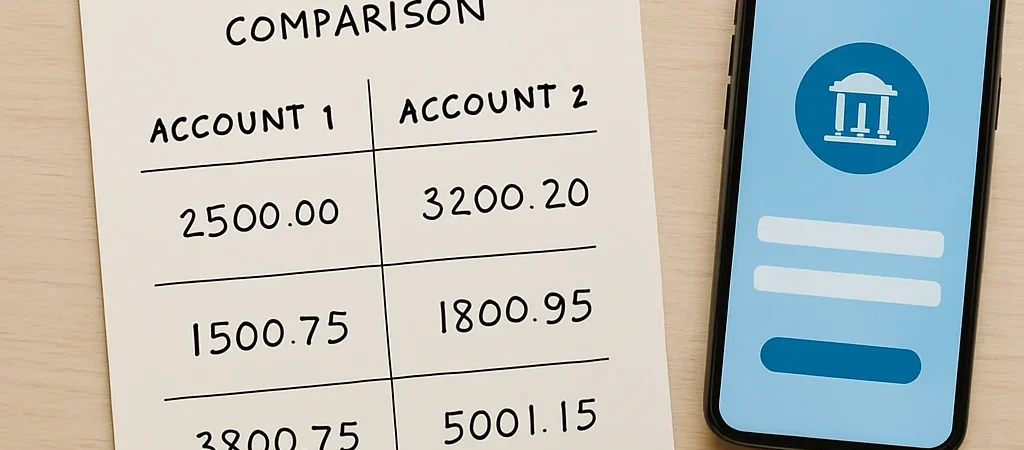
One savings account may be easy to manage from a phone but require a minimum balance; another may have different service charges or access conditions. Comparing account names alone misses the details that affect daily banking. A short checklist can make the bank’s terms easier to evaluate.
Check Balance and Service Rules
Read whether the account has a minimum balance requirement, how it is calculated, and what charges may apply if the requirement is not met. Check for fees related to debit cards, cash transactions, cheque services, or other features you expect to use. Banks and account variants can differ, so rely on the current schedule of charges and account documents.
Follow Your Everyday Payments
Think through how money usually enters and leaves your account: salary credits, UPI payments, automatic bill payments, cash deposits, or transfers. Confirm that the account offers the services you need and understand any limits or conditions. If you make frequent business collections or supplier payments, compare current accounts as well as savings accounts, and ask the bank which account type fits that use.
Separate Access From Interest
An advertised interest rate is only one part of a savings account comparison. Check how interest is calculated and credited, whether the rate can change, and whether the account’s access or balance conditions suit your plans. Also consider practical access: branch and ATM availability where you live or work, mobile banking features, and support when a transaction needs attention.
Before opening an account, gather the latest account terms, required identity and address documents, and the full fee schedule. Make a simple comparison using the features you will actually use. The better fit is not automatically the account with the longest feature list; it is the one whose conditions match your banking routine.